Credit Card Bill··Updated
Credit card lost and replacement came with a lower limit
You blocked a lost card. The replacement arrived thinner. Hotlisting is not always a like-for-like reprint. Check outstanding, standing instructions, and the new utilisation.

The SMS landed first.
"Your card ending 8890 is blocked. Replacement dispatched. New limit may differ as per policy."
You were not looking for a speech. You wanted someone to point at one line on the report — or at the one paper the desk actually wants — and say what it means in ordinary English.
What that message is actually saying
Lost-card process is about stopping fraud. It is also a chance for them to re-underwrite. A lower limit can appear. Old SIPs, rent mandates, and app tokens may still try the dead plastic. You can get both a decline at the chemist and a smaller reported limit on the bureau.
Lenders reuse short phrases because they are cheap to send. Policy norms, under review, minus applicable charges, visit branch: each one hides a list. Your job is to pull that list out of the PDF or the document packet, not to decode the officer's mood in the corridor.
If you are travelling, lost-card plus lower limit can strand you. Keep a second official payment path. If fraud did happen, dispute those swipes through the issuer, with the police complaint if they ask. This site will not teach card-fraud methods. It will tell you to use the official dispute box and to never share OTP.
The one report line to read first
Open the consumer report you downloaded from the official bureau path. Ignore the decorative score ring for a minute. Find this kind of line:
Same account, new limit · or a new account number · utilisation jumps if outstanding stayed
Confirm whether it is the same trade line or a new one. Pay the old outstanding so the blocked card does not throw late fees while the new one sits in a courier van. Update auto-pay. If the limit fell, treat it like any other cut: pay down the ratio.
Block fast. Then log in and look at limit and due date. Do not wait for the courier to start thinking. Fraud spends will not wait. Your electricity mandate also will not wait.
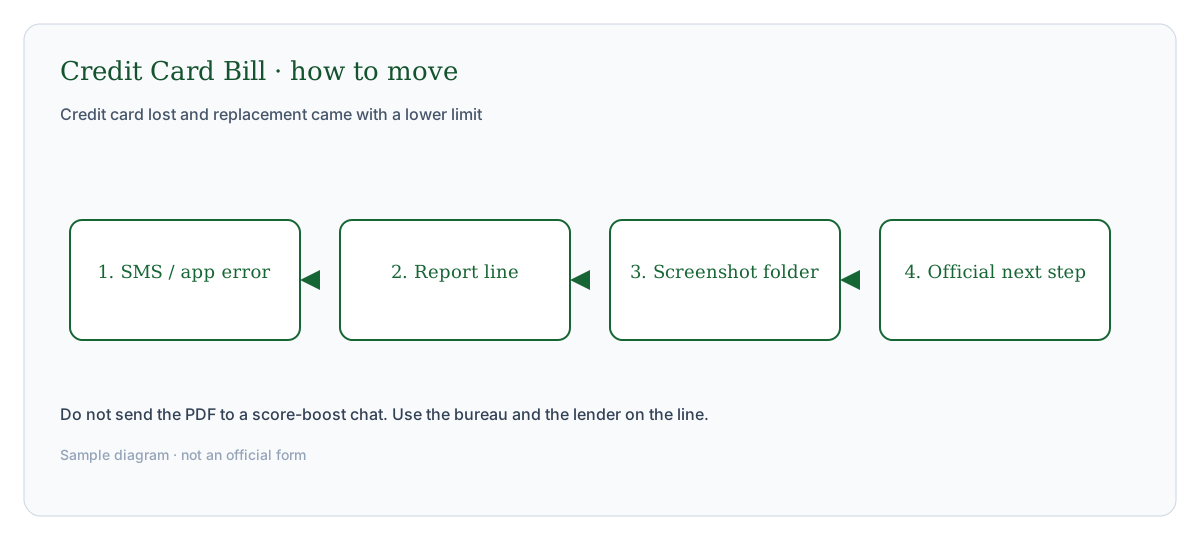
Screenshot the error. Skip the 7-day score ads
Block SMS, replacement tracking, new limit screen, and any failed mandate. If a fraud swipe happened, keep that SMS too.
A caller who already knows the card was lost and asks for OTP ‘to confirm replacement’ is a classic steal. The bank already blocked it. They do not need OTP from a phone call.
If a page promises a score of 800 in seven days, close it. If a stranger wants remote access to 'clean CIBIL', close that too. The official bureau site and the lender that holds the account are the two doors that count. Everything else is noise with a PAN field.
Keep the screenshots in a folder named with the date. When you visit a branch, you are not performing. You are showing two or three pictures and asking which of those pictures they used.
What to do this week
- Block in the official app. Then call the number on the issuer site if needed.
- Watch transactions for 48 hours.
- Pay dues on the blocked account path they show.
- When the new card comes, set PIN only in official channels.
- Rebuild mandates one by one.
People think hotlist deletes the bureau account. It usually continues. People think a lower replacement limit is a CIBIL error. It is issuer policy. Another mix-up: activating a card that arrived with a torn envelope without calling them first.
Leave these ideas aside
Do not send a photo of the new card to a ‘support’ Telegram. Do not write the PIN on the envelope.
A helper blog cannot sit in the dispute queue for you. It cannot call recovery. It cannot promise a sanction. It can tell you to read the line, keep the screenshot, and use the official form.
If the file is personal — a court remark, a guarantee, a joint loan after a breakup — take the PDF to the lender and, where the facts are heavy, to a qualified adviser. Do not crowd-source the next step in a comment section.
A calm way to talk at the branch
Carry the SMS, the PDF page, and one proof (payment, offer letter, KYC, valuation slip — whichever this problem needs). Ask three questions only: which line they used, which document is missing, and whether a cool-off applies before you apply again. Write the answers in your notes app. That is a better meeting than a twenty-minute speech about how decent your salary feels on WhatsApp.
If they repeat "policy norms" and nothing else, use their grievance mail with the application number. You may still get a short code. The bureau page will still be more honest than the corridor.
FAQ
Why was the limit cut after a loss?
Risk review. Ask them. Meanwhile pay down utilisation.
Will lost-card show as default?
Loss itself is not default. Unpaid bills are.
Can I refuse the lower limit?
You can ask for a review with income proof. You may still get no.
Should I take a new card from another bank now?
Only if you need it and can handle another enquiry. Fix mandates first.
Short disclaimer
Loan Atka is not a bank and not a CIBIL office. Score formulas belong to the bureau. No article can guarantee approval, a deleted enquiry, or a higher number next week. The official report and the lender letter are final for your file. For a personal case, speak to the bank or NBFC that holds the account.
Why this sits in Credit Card Bill
This piece is filed under Credit Card Bill because that is the shelf where the first screenshot usually belongs. You may still need a second shelf — a KYC letter as well as a bureau line, or a foreclosure quote as well as a DPD cell. Start on this shelf so you do not wander into a random 'score boost' page that has nothing to do with credit card lost and replacement came with a lower limit.
The tagline of this site is crude on purpose. If CIBIL is not opening, if a loan is rejected, if a card bill is late, check the line before you stand in the bank queue. That is the whole method. It works on this problem the same way it works on the other thirty-nine.
Loan Atka is a helper blog. The official bureau report is the one that counts. For your own file, talk to the bank or NBFC that holds the account.


