Old Dues··Updated
I was a guarantor and my friend’s loan defaulted
A guarantee is not a favour on WhatsApp. If the borrower stops paying, the same account can stain your file. Read the guarantor line before you panic-apply.

The SMS landed first.
"You are a guarantor on loan account XXXX. The account is overdue. Please contact the borrower."
You were not looking for a speech. You wanted someone to point at one line on the report — or at the one paper the desk actually wants — and say what it means in ordinary English.
What that message is actually saying
They are telling you the primary borrower slipped. Depending on the contract, they can chase you. The bureau may show you as a guarantor on a delinquent trade. Your own personal loan can then die even if your own EMIs were perfect. Friendship does not have a policy code.
Lenders reuse short phrases because they are cheap to send. Policy norms, under review, minus applicable charges, visit branch: each one hides a list. Your job is to pull that list out of the PDF or the document packet, not to decode the officer's mood in the corridor.
If you are applying for a house, tell the housing-finance desk early, with the PDF. Surprise guarantor defaults at legal stage waste months. If the friend is untraceable, do not start a public fight with their family on Facebook. Use official notices and advice. Keep your own cards on time so the file has one wound, not five.
The one report line to read first
Open the consumer report you downloaded from the official bureau path. Ignore the decorative score ring for a minute. Find this kind of line:
Account · guarantor / associated · status overdue · member name of the friend’s loan
Find whether you are listed as guarantor or as joint. Those legal hats differ. Still, both can hurt a new unsecured file. You need the friend’s payoff plan in writing, or a legal path to exit the guarantee if the contract and the lender allow — many do not, while the loan is live.
Call the friend once. Then call the lender’s official desk. Do not take over random cash in cash without a receipt. If you must pay to protect your own home-loan dream, get a letter that says what they will report after the payment.
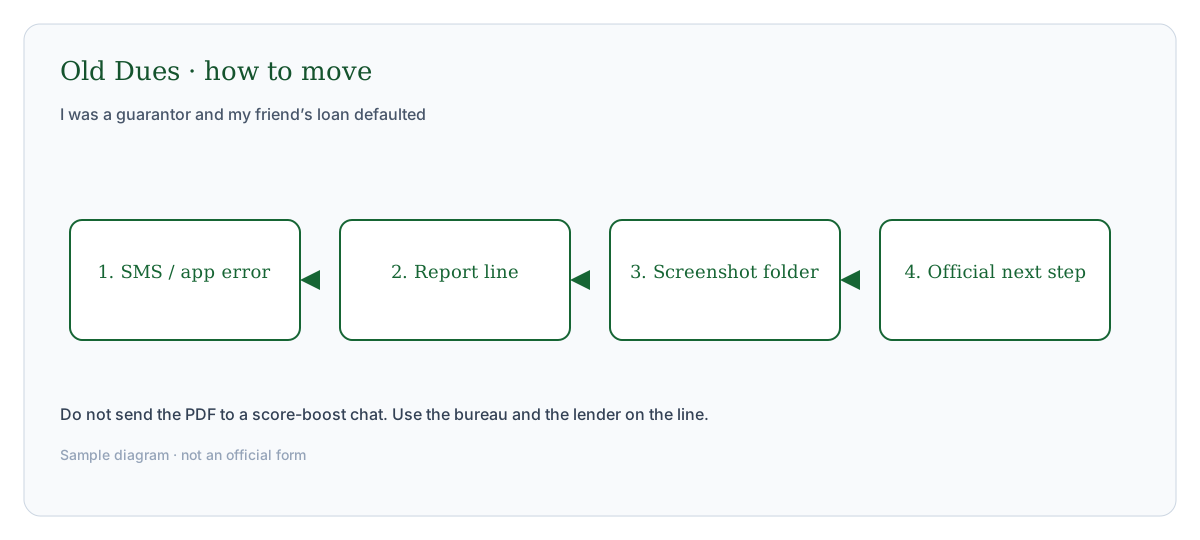
Screenshot the error. Skip the 7-day score ads
The guarantor SMS, the bureau associated-account block, and the original guarantee pages if you have them. If you signed at a dealer five years ago, hunt that file.
Illegal ‘remove guarantor from CIBIL’ services are a trap. The lender has to change the contract and the feed.
If a page promises a score of 800 in seven days, close it. If a stranger wants remote access to 'clean CIBIL', close that too. The official bureau site and the lender that holds the account are the two doors that count. Everything else is noise with a PAN field.
Keep the screenshots in a folder named with the date. When you visit a branch, you are not performing. You are showing two or three pictures and asking which of those pictures they used.
What to do this week
- Confirm on the PDF that the delinquent account is the one you signed.
- Ask the lender what they need to mark you clean after a cure.
- If the friend will not pay, decide with a lawyer whether you will pay, contest, or wait — this blog will not pick that for you.
- Pause your own new unsecured applications.
- Never sign a new guarantee while this one is on fire.
People think a verbal ‘just for formality’ at a two-wheeler shop is harmless. The formality is the contract. People also think paying one EMI as a friend deletes guarantor status. It may only cure one month. Another mix-up: a co-applicant is not the same as a guarantor, but both can hurt.
Leave these ideas aside
Do not threaten the friend with illegal recovery talk. Do not give a tout the right to ‘handle’ the lender with your OTP.
A helper blog cannot sit in the dispute queue for you. It cannot call recovery. It cannot promise a sanction. It can tell you to read the line, keep the screenshot, and use the official form.
If the file is personal — a court remark, a guarantee, a joint loan after a breakup — take the PDF to the lender and, where the facts are heavy, to a qualified adviser. Do not crowd-source the next step in a comment section.
A calm way to talk at the branch
Carry the SMS, the PDF page, and one proof (payment, offer letter, KYC, valuation slip — whichever this problem needs). Ask three questions only: which line they used, which document is missing, and whether a cool-off applies before you apply again. Write the answers in your notes app. That is a better meeting than a twenty-minute speech about how decent your salary feels on WhatsApp.
If they repeat "policy norms" and nothing else, use their grievance mail with the application number. You may still get a short code. The bureau page will still be more honest than the corridor.
FAQ
Can I take a loan while I am a guarantor on a regular account?
Sometimes yes, if the account is clean and FOIR still fits. A defaulted guarantee is a different story.
Will they deposit my salary?
Depends on the contract and the law of the case. Speak to the lender and, if needed, a lawyer. Do not take street advice.
Can the bank remove me if the friend finds a new guarantor?
Only if they agree in writing. They often will not, mid-loan.
Does this hit my score even if I never missed my own EMI?
Associated delinquencies can still weigh on underwriting. The score model and the policy grid may both notice.
Short disclaimer
Loan Atka is not a bank and not a CIBIL office. Score formulas belong to the bureau. No article can guarantee approval, a deleted enquiry, or a higher number next week. The official report and the lender letter are final for your file. For a personal case, speak to the bank or NBFC that holds the account.
Loan Atka is a helper blog. The official bureau report is the one that counts. For your own file, talk to the bank or NBFC that holds the account.


